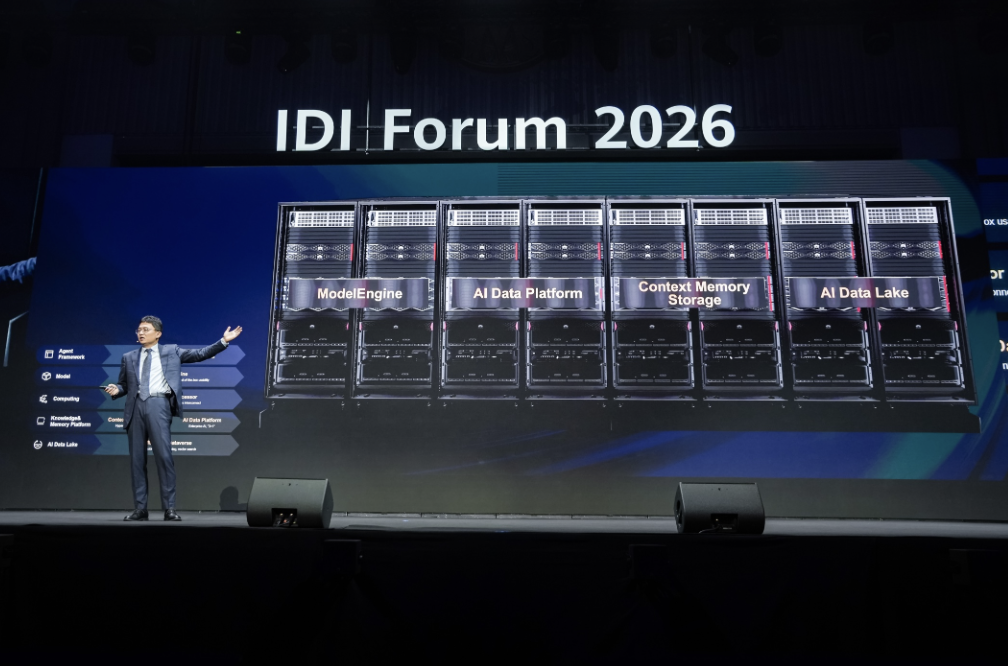
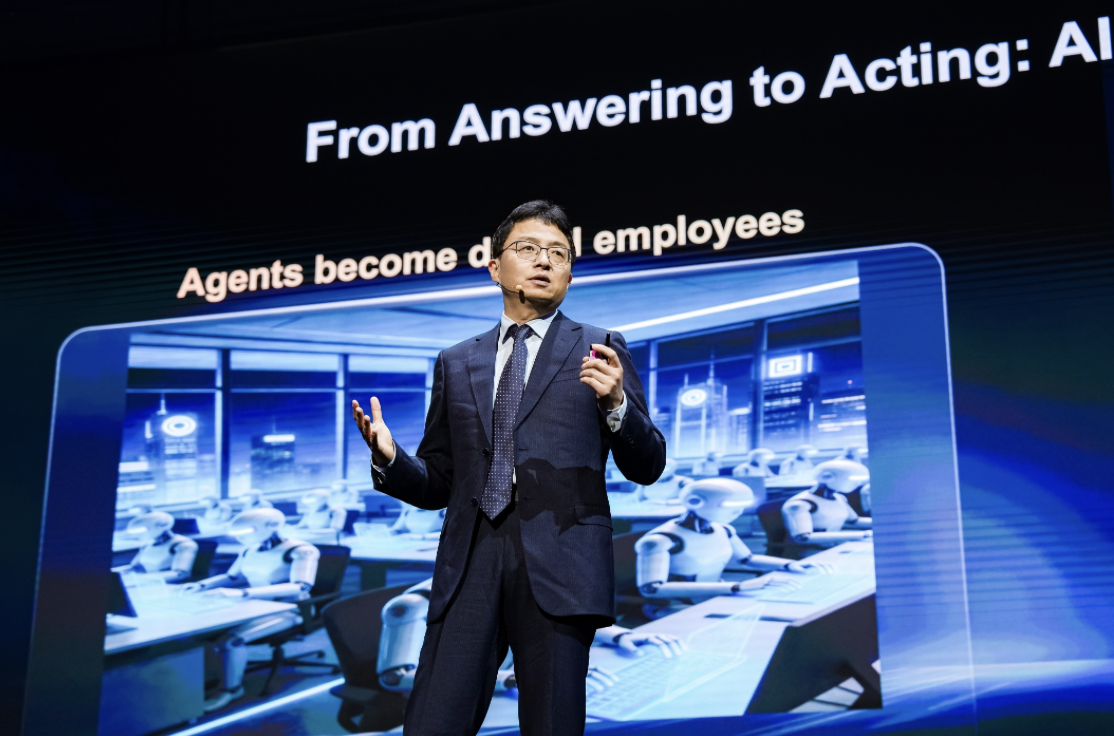
The Huawei IDI Forum 2026 included a presentation by Yuan Yuan, Vice President of Huawei and President of the Data Storage Product Line. The event featured the introduction of Huawei’s full-stack data infrastructure intended for AI Data Centres (DCs). The initiative is positioned as supporting the development of industry intelligence and the digital transformation of enterprises.
Enterprises are currently experiencing increased adoption of AI-driven systems. Digital agents are being used in productivity workflows and, in some cases, are evolving into digital roles within organisations. This trend is contributing to changes in traditional IT architectures to better accommodate AI-focused requirements. Huawei’s approach includes several components: data lakes, AI data platforms, compute capabilities, models, agent frameworks, and data resilience mechanisms.
Within the AI data lake area, Huawei references OceanStor Pacific Scale-Out Storage, which provides high-density storage designed to optimise storage costs. The DME Omni-Dataverse is also included, supporting multiple data types and enabling real-time data ingestion.
In the area of knowledge and memory platforms, Huawei introduced Context Memory Storage (CMS), which is designed to support heterogeneous computing and reduce token retrieval times in data processing workflows.
For AI inference workloads, a 3+1 AI data platform is described that combines KV cache acceleration with a knowledge base and reports retrieval accuracy of over 95%. The Unified Cache Manager (UCM) is included to improve inference performance through scheduling optimisation.
For model engineering and resource management, Huawei’s ModelEngine is presented as a platform that supports model deployment and compute resource partitioning for scheduling and utilisation purposes.
The agent framework and data resilience components are described as providing end-to-end support for AI data protection. The ModelEngine Nexent platform includes functions that can adjust agent skills based on natural language input.
Overall, the forum presentation outlined Huawei’s data infrastructure components related to AI-oriented systems and their intended use in enterprise environments.