Digital Newsletter
Each week our editor Phil Alsop rounds up the most popular articles, videos and expert opinions. We compile this into a Digital Newsletter and send it straight to your inbox every week.
Digital Magazines
We'll let you know each time a new edition of Data Centre Solutions is released so that you're always kept up-to-date with the latest and greatest news and press releases.
Video Magazines
The Data Centre Solutions Video magazine contains the latest Zoom interviews with experts in the industry.
Not all battery chemistries are designed for the same role. Many of the energy storage technologies deployed in data centers today were developed for an earlier generation of infrastructure, defined by relatively stable loads, longer discharge durations, and different safety and sustainability expectations.
As data center power profiles evolve in response to increasingly dynamic digital workloads, higher peak power demands, and a growing focus on resilience and environmental impact, the industry is re-examining how backup power is delivered.
Nickel-zinc is a fundamentally different chemistry, purpose-built for high-power, short-duration applications where immediate power matters most, delivering rapid, repeatable response alongside superior safety and a more sustainable foundation for both emerging and traditional IT environments.
The Legacy of Traditional Solutions
Lead-acid batteries earned their place in critical infrastructure as a predictable and cost- accessible option, particularly in facilities with minimal space constraints. Though, these systems carry large footprints, significant weight, and require frequent replacement, making them less adaptable to the changing needs of IT power infrastructure.
Lithium-ion chemistry addresses some of these challenges with higher energy density and a longer service life than lead-acid, making it an attractive upgrade where space is at a premium. However, the risk of thermal runaway and the release of flammable, toxic gases continue to impact operator and facility safety across the data center industry.
In high-cycle, AI-driven environments, both chemistries often require system overdesign or operational compromises to manage rapid load fluctuations, temperature mitigation, and long-term infrastructure risk.
Optimizing Immediate Power Per Square Foot
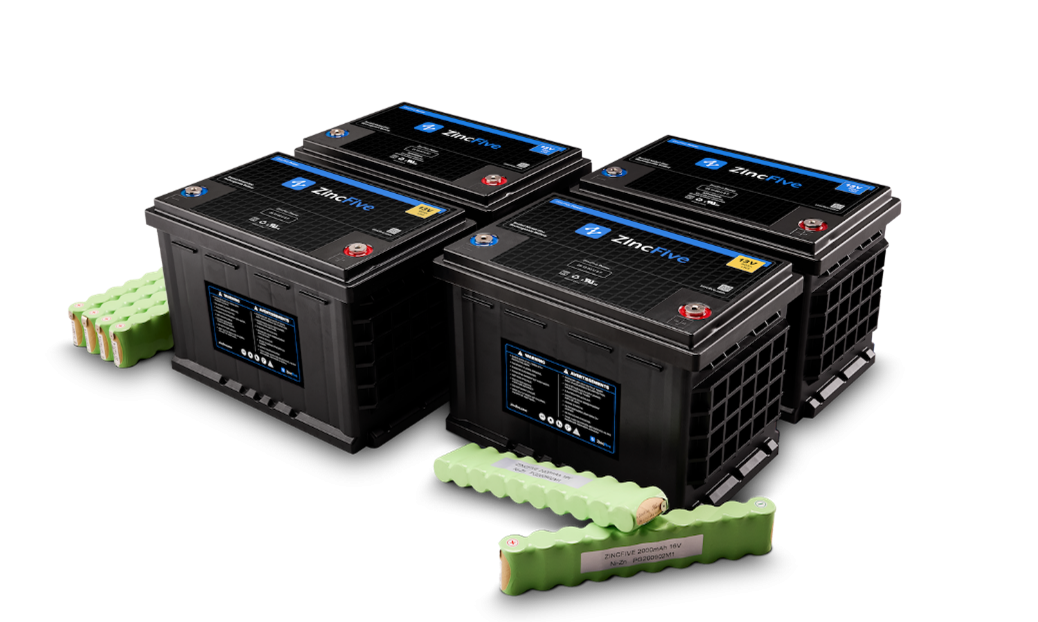
Nickel-zinc solutions provide up to three times the power of alternative chemistries at half the footprint of lithium-ion and one-third the weight of lead-acid. This smaller, lighter form factor simplifies installation and reduces structural requirements, allowing operators to reclaim valuable floor space and increase compute capacity without costly facility expansions.
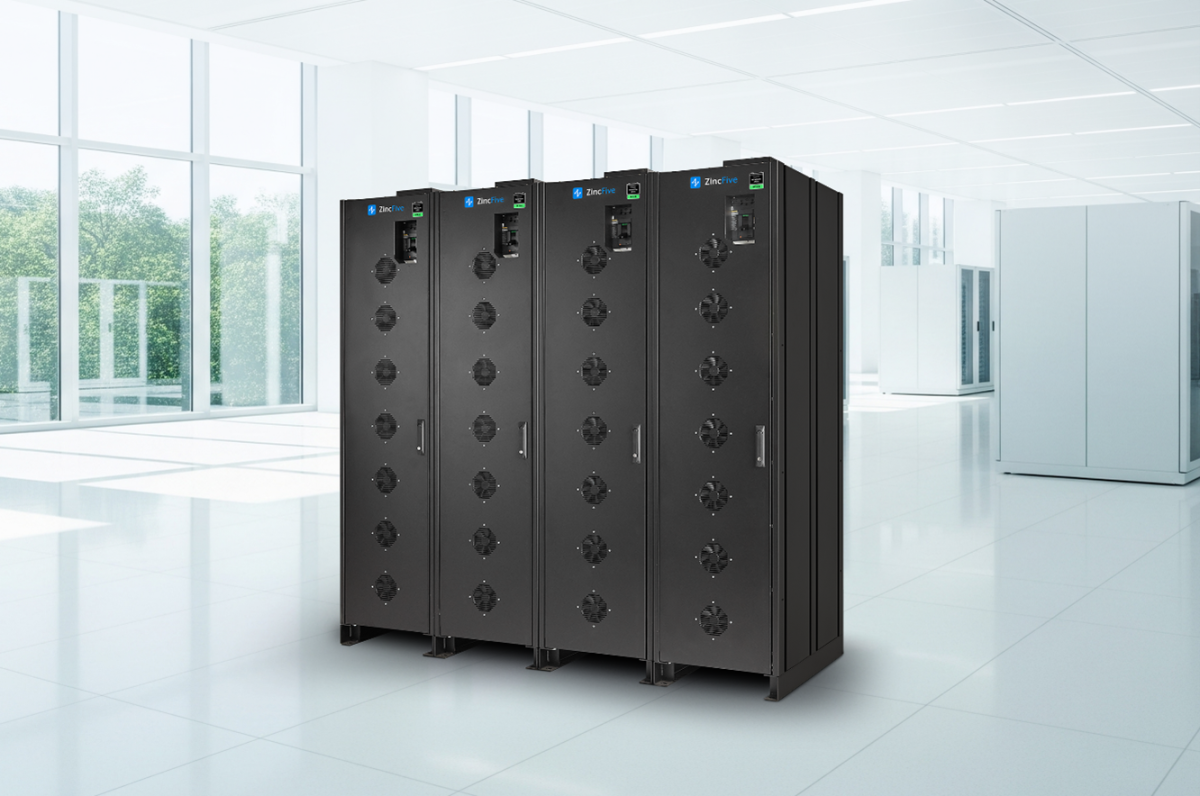
Equally important to space utilization is matching chemistry to the application. Traditional battery energy storage systems (BESS) prioritize long-duration energy delivery and are overutilized in environments where power density and immediate discharge capability are required. Immediate Power Solutions (IPS) are designed to deliver instantaneous, high-rate, short-duration power, and are ideal for supporting uninterruptible power supply (UPS) systems and managing AI-driven load fluctuations.
Nickel-zinc’s high power density and compact footprint, alongside the safety, reliability, and sustainability benefits outlined below, make this chemistry an ideal choice for IPS applications.
Safety and Reliability as a Design Feature
Thermal runaway events associated with lithium-ion systems have heightened safety concerns in data centers and driven the need for BMS-initiated shutdowns and extensive temperature mitigation infrastructure. Nickel-zinc technologies have inherent characteristics that minimize these challenges, capable of operating across a wider temperature range than lead-acid or lithium-ion without any risk of thermal runaway at the cell level.
Nickel-zinc systems also continue operating even if individual cells weaken or fail, supporting uninterrupted performance and reducing the risk of unplanned downtime.
These safety and reliability measures reduce reliance on external control mechanisms, improving operational flexibility while minimizing the likelihood of costly and dangerous failure events.
Total Cost of Ownership Over the Full Lifecycle
Total cost of ownership (TCO) accounts for maintenance, replacement frequency, cooling requirements, downtime risk over the life of the facility, and post-life material management. With comparatively shorter lifespans, lead-acid systems drive higher long-term costs through frequent replacements, intensive maintenance, and inefficient space usage. Despite a longer service life, lithium-ion solutions introduce additional expenses tied to cooling systems, safety controls, and protections required to manage thermal risk.
Nickel-zinc batteries offer a service life of up to 15 years, significantly reducing replacement cycles compared to lead-acid and narrowing the lifecycle cost gap with lithium-ion. Lower maintenance demands, reduced cooling dependency, and safe operation without complex mitigation systems contribute to more predictable operating costs over time. When combined with footprint reduction and superior safety advantages, nickel-zinc chemistry delivers a significantly lower total cost of ownership than lithium-ion or lead-acid chemistries over the full product lifespan.
Sustainability Without Tradeoffs
Regulatory pressure, corporate climate standards, and stakeholder expectations have elevated sustainability to a core decision criterion for infrastructure investments. Data center operators agree, as 87% of respondents from the 2025 Data Center Energy Storage Industry Insights Report consider sustainability a priority, up from 81% in 2024.
Nickel-zinc batteries are built from conflict-free, widely available materials that are over 90% recyclable at end of life. With a lifespan up to 3x longer than lead-acid solutions, nickel-zinc systems reduce waste and deliver 25-50% lower greenhouse gas emissions compared to lead-acid and lithium-ion alternatives.
To support informed sustainability decisions, ZincFive’s BC 2 UPS Battery Cabinet has a UL-certified Environmental Product Declaration and is included in the PEP Ecopassport database. Nickel-zinc continues to demonstrate a significantly lower climate impact than alternative chemistries without compromising operational excellence.
A Solution for AI Workloads
AI workloads place unique demands on data center power systems. GPU-based processing requires power in milliseconds, often multiple times per minute, creating dynamic load spikes that can exceed 15x idle power levels and strain internal power infrastructure.
To manage these pulses, alternative chemistries often require overdesigning UPS systems at two to three times the battery quantity, along with supplemental technologies such as supercapacitors, cooling systems, or external energy storage systems dedicated to short-duration power events. These strategies increase cost, footprint, and system complexity, while still requiring graphic processing units (GPUs) to operate below peak capacity due to power delivery constraints.
Purpose-built for high-power, short-duration applications, nickel-zinc chemistry is capable of immediate response, rapid recharge, and millions of repeatable cycles over its lifespan. By absorbing AI-driven power spikes within the existing UPS footprint, nickel-zinc enables full utilization of GPU clusters without constraining performance and reduces the need for overdesign or parallel mitigation technologies.
ZincFive’s BC 2 AI UPS Battery Cabinet is the dual-use nickel-zinc powered solution that allows data centers to manage AI power volatility using existing infrastructure and footprints, rather than relying on capital-intensive overbuilds.
A Chemistry Aligned with the Future
Nickel-zinc battery technology provides backup power systems with higher power density, faster response times, uncompromising safety, and stronger sustainability standards.
Proven across millions of operating hours and engineered specifically for high-power, mission-critical environments, nickel-zinc addresses the shortcomings of alternative chemistries without introducing new compromises. As data center power demands continue to evolve, nickel-zinc stands out as a future-proof, AI-ready solution for reliable, safe, and sustainable data center power.