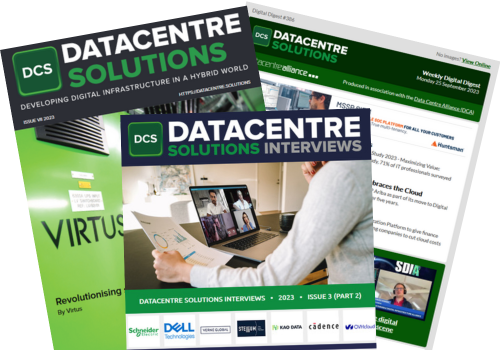
Digital Newsletter
Each week our editor Phil Alsop rounds up the most popular articles, videos and expert opinions. We compile this into a Digital Newsletter and send it straight to your inbox every week.
Digital Magazines
We'll let you know each time a new edition of Data Centre Solutions is released so that you're always kept up-to-date with the latest and greatest news and press releases.
Video Magazines
The Data Centre Solutions Video magazine contains the latest Zoom interviews with experts in the industry.
A new survey by Actus, the UK provider of the award-winning the Complete Performance, Learning and Talent Suite and the HR Uprising Podcast, has revealed that remote people management is more time consuming than the traditional style in the days of the office.
The research carried out in January 2021, amidst the third UK national lockdown, showed that an overwhelming 95% of participants consider remote management slightly or entirely different to face-to-face management. As the workforce becomes accustomed to a virtual setting, the results demonstrate that in-person interactions with team members are being replaced by a remote management style which places greater emphasis on flexibility, communication, trust, and overall collaboration.
Remote vs face-to-face management style
From the survey, 55% of respondents reported spending more or much more time on people management activities, with only 16% reporting they spend less. When questioned on the most effective management style, a ‘collaborative’ approach, whereby clear objectives are discussed and agreed together, was voted the most effective style within a remote environment. Unsurprisingly, a ‘delegative’, hands-off style, was voted the least effective. This explains the additional time spent managing people as a collaborative approach is much more time-consuming. Yet, it also emphasises the importance of providing clear communication and then employing trust to allow home working colleagues to carry out a task effectively, and with greater autonomy.
Are people managers stepping up to the task?
The results also revealed that 95% of respondents value their role as a people manager or consider it a key responsibility that they take very seriously. This is a testament to the people managers who, despite a rapid shift to the working environment caused by the COVID-19 pandemic, have invested a great deal of time and effort to adapt their remote management style to ease the pressure off teams, despite having less visibility. At a time where employees are dealing with uncertainty both at home and at work, being proactive and adopting a human-centric approach is clearly a defining trait for successful people management.
The remote management behaviours that are keeping the cogs turning
When asked what people management behaviours were more important within a remote environment compared to face-to-face, a staggering 82% of people rated providing frequent check-ins and one to ones as significantly more important. With teams distributed in varying locations, the need for pre-arranged conversations or meetings allows remote management to feel more structured and more onerous whereas office-based management would be more ad hoc. Additionally, 58% rated providing recognition and praise as more important within the current landscape, as was taking a personal interest in an individual, at 57%. As face-to-face interactions are removed, setting clear goals, recognising achievements and adopting an empathetic approach, is more vital than ever to ensure employees are continually motivated and encouraged within a virtual world.
“These results demonstrate a clear shift in the people management style within a remote setting and the importance of creating a learning culture that is built on trust and support by empowering teams with the opportunity to enjoy greater autonomy,” said Lucinda Carney, CEO of Actus Software.
“However, what is equally revealing is that remote people management requires a level of collaboration in which teams are offered regular, informative feedback to ensure employees are coping well in this entirely new environment. It also means taking the additional time to recognise your team's achievements while taking a genuine interest in your employees within a workplace that is now defined by distance.”