Digital Newsletter
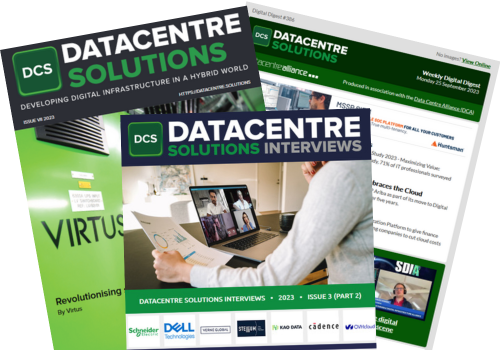
Each week our editor Phil Alsop rounds up the most popular articles, videos and expert opinions. We compile this into a Digital Newsletter and send it straight to your inbox every week.
Digital Magazines
We'll let you know each time a new edition of Data Centre Solutions is released so that you're always kept up-to-date with the latest and greatest news and press releases.
Video Magazines
The Data Centre Solutions Video magazine contains the latest Zoom interviews with experts in the industry.
BMC, a software solutions provider, has announced updates in its Control-M and BMC AMI portfolios, focusing on AI-driven advancements. These updates aim to simplify workflow creation, automate issue resolution, and leverage mainframe expertise to elevate operational efficiency.
BMC has set its sights on bridging the gap between IT and business users by using AI. The AI Workflow Creator seeks to empower business professionals rather than IT experts to build and manage advanced workflows. This shift aims to allows organisations to harness domain expertise, often under-documented, by asking business practitioners to express their intentions. The AI takes on the task, crafting workflows to match their needs.
This aims to simplify workflow onboarding for new users and support experienced users in managing workflows more efficiently.
The Control-M solution includes a wide range of integrations with enterprise applications, databases, cloud services, and more. New additions, such as AWS Bedrock and Google Vertex AI, enable teams to orchestrate multiple AI agents, supporting the management of complex, AI-driven workflows and scaling AI initiatives more efficiently.
As systems become more event-driven, businesses should consider turning events into swift automated actions. Control-M's Event-Driven Workflows enable organisations to respond to real-time business and data events by listening to systems like Kafka and Amazon SQS. These capabilities seek to create agile and dynamic orchestration, fostering improved responsiveness and reduced latency in modern data pipelines.
Available for both self-hosted and SaaS environments, this feature aims to bridge the gap between batch and real-time processing for smarter operations.
With growing workloads and system complexities, BMC AMI Assistant provides AI-driven insights to help bridge the skills gap. The solution provides natural-language guidance and integrates with nine BMC AMI operations solutions, supporting issue resolution without always needing expert intervention
BMC AMI zAdviser employs AI-driven application analysis to aid development leaders in making quick decisions. By unifying DevOps telemetry into a cohesive narrative, it aims to identify risks, advise on improvements, and reduce operational exposure efficiently.