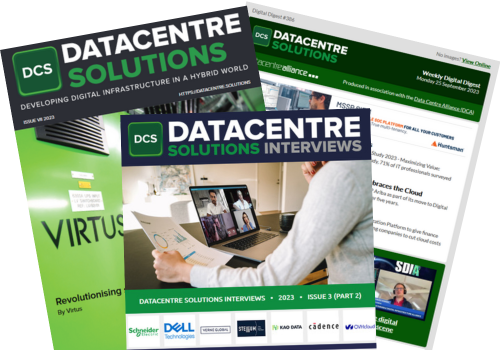
Digital Newsletter
Each week our editor Phil Alsop rounds up the most popular articles, videos and expert opinions. We compile this into a Digital Newsletter and send it straight to your inbox every week.
Digital Magazines
We'll let you know each time a new edition of Data Centre Solutions is released so that you're always kept up-to-date with the latest and greatest news and press releases.
Video Magazines
The Data Centre Solutions Video magazine contains the latest Zoom interviews with experts in the industry.
New research from Basis Technologies reveals well over half of enterprises (59%) currently rely on “archaic” Excel spreadsheets for managing changes within SAP systems, despite SAP recently releasing its first enterprise generative AI product to transform the way businesses run.
This is despite 96% of senior leadership surveyed saying SAP is critical to the day-to-day functioning of their organization.
A reliance on outdated manual tools and processes is having a direct impact on enterprises’ ability to achieve their growth objectives, according to the study, with the majority of organizations (88%) admitting that challenges related to deploying change create insurmountable barriers in SAP-driven business transformation.
Polling 200 enterprises using SAP across the UK, US and Germany, Basis Technologies has identified that the innovative capabilities of SAP are simply not being realized by some businesses, who are concerned by complexities rather than embracing opportunities – this is despite 93% of the world’s enterprises using SAP in some form.
“Organizations are suffering from an SAP hangover that is hindering best practice, relying on archaic spreadsheets”, comments David Lees, CTO at Basis Technologies. “It’s quite staggering that, at a time when SAP are releasing an enterprise generative AI offering, businesses are still trying to operate and manage their systems like it’s 1985. When SAP was originally implemented, there wasn’t the same level of focus on agility and change management.”
Breaking free from decades of the same, now suboptimal, practice is a challenge many enterprises face – as well as fear of the unknown. Paralyzed by uncertainty, over a third of enterprises (35%) delay making SAP changes due to fears of operational disruption, while nearly all enterprises (96%) worry about unintended consequences of disrupting critical business systems when trying to implement change within their SAP landscape. Four in ten claim this process demands up to 50% more effort and cost.
Taking ownership of SAP-led transformation strategies is a discussion that reveals an interesting dichotomy, according to the study. While more than a third of SAP managers believe the C-Suite should own transformative strategies involving SAP, because of their role in defining business transformation, only 13% report that to be the case. In reality, over half (52%) of SAP managers reveal that they are the ones owning the process for their organization.
“C-Suites need to upskill themselves on IT awareness so they can make more informed decisions”, he says. “IT departments often operate in siloes, and the CIO’s scope has changed aggressively so they don’t necessarily have the awareness of SAP that they should. The reality is that the modern CIO is focusing on newer, shinier, but ultimately less significant tech. Instead, to unlock their full potential, SAP should be at the centre of a business’ transformation strategy.”