Digital Newsletter
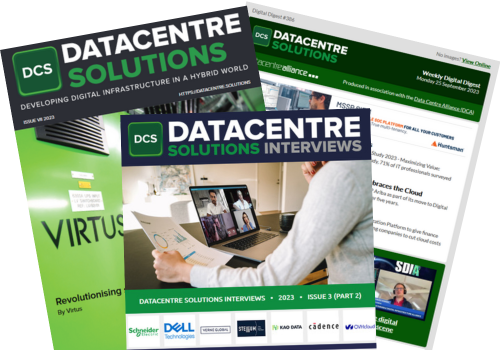
Each week our editor Phil Alsop rounds up the most popular articles, videos and expert opinions. We compile this into a Digital Newsletter and send it straight to your inbox every week.
Digital Magazines
We'll let you know each time a new edition of Data Centre Solutions is released so that you're always kept up-to-date with the latest and greatest news and press releases.
Video Magazines
The Data Centre Solutions Video magazine contains the latest Zoom interviews with experts in the industry.
The majority of global decision makers say they plan to fully embrace the autonomous enterprise within the next 10 years, according to new research from Pegasystems. The study, conducted by research firm Savanta and unveiled at PegaWorld iNspire, the company’s annual conference in Las Vegas, surveyed 600 business decision makers worldwide on their understanding of the autonomous enterprise, their plans for implementation, and some of its drivers.
The autonomous enterprise is an organization which comprehensively applies AI and automation to engagement, servicing, and operations across the organization to operationalize agility and create a business that can become self-optimizing. The study found that 58% of respondents expect to define themselves as an autonomous enterprise within the next 10 years. With just 15% saying they feel they are already at this stage today, and 36% projecting they will reach this point five years from now, the upward curve of autonomous enterprise adoption is clear. Tellingly, three quarters (73%) of respondents said they already have some sort of plan to start becoming an autonomous enterprise. When asked what they expected their position to be 10 years from now, an overwhelming 96% said the same.
One of the leading drivers of this new age of self-optimizing technology is a growing understanding of issues caused by old, inefficient ways of using technology to solve one-off problems. These include:
No such thing as a ‘quick fix’: When asked what their primary technology investment strategy was, almost half (46%) of respondents pointed to either ‘quick fix’ technology solutions to resolve specific issues, or off-the-shelf software solutions that provide pre-packaged capabilities for specific applications. Forty percent admitted that such ‘quick fixes’ had resulted in operational inefficiencies within their organization, with more than one third (35%) saying it has increased risk. Forty percent also cited their belief that such ‘band-aid’ solutions were quicker to implement as their rationale for using them, with 31% saying their options were limited because they must stick to an approved list of vendors. Only 4% of respondents said they do not invest in one-off, disconnected ‘band aid’ technology solutions at all.
Increased costs: One quarter of all respondents say they spend between 51 and 100% of their annual IT spend on maintaining solutions that are no longer fit for purpose. Forty-one percent say that investments in disconnected legacy systems have resulted in increased costs.
Where are our customers going?: More than one in three (36%) respondents say they are kept awake at night worrying that customers aren’t getting a good enough experience and that they risk losing them to a competitor. One quarter of respondents also pointed to concerns that siloed legacy technology, systems, and channels had already led to disjointed customer experiences (30%), poor customer service (26%), or loss of customers and revenue (26%).
Eighty-four percent of respondents agreed that unified platforms that connect systems and channels to automate, self-optimize, and align workflows and decisions to business strategy will be either ‘extremely’ or ‘very’ important to improve their operational efficiencies. With the vast majority (75%) also agreeing that AI will have a role to play in their business over the next five years – 40% say it will be ‘pivotal’ – the rise of the autonomous enterprise looks set to gather pace in the years ahead.