Digital Newsletter
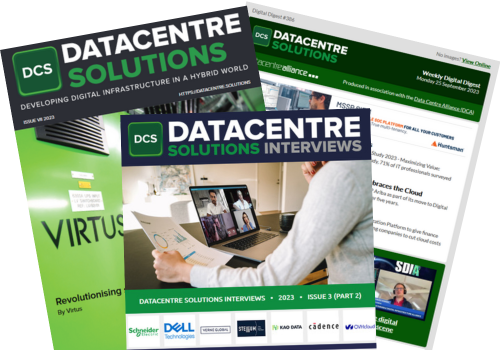
Each week our editor Phil Alsop rounds up the most popular articles, videos and expert opinions. We compile this into a Digital Newsletter and send it straight to your inbox every week.
Digital Magazines
We'll let you know each time a new edition of Data Centre Solutions is released so that you're always kept up-to-date with the latest and greatest news and press releases.
Video Magazines
The Data Centre Solutions Video magazine contains the latest Zoom interviews with experts in the industry.
In order to provide guidance in the fast-growing market for cloud platform services, Gartner has highlighted the key trends that application leaders should consider as they make decisions on technology, budget and organisation.
Trend No.1: A Booming PaaS Market
As of 2019, the total PaaS market contains more than 360 vendors, offering more than 550 cloud platform services in 21 categories. Gartner expects that, from 2018 to 2022, the market will double in size and that PaaS will be the prevailing platform delivery model moving forward.
“All PaaS segments show healthy growth rates. However, the market remains short on standardisation, established practices and sustained leadership. Vendors need to address those issues in a timely manner to encourage adoption by more risk-averse organisations,” Mr Natis said.
Trend No.2: The Cloud Platform Continuum
PaaS capabilities aim to support the role of a cloud platform. However, all cloud services including infrastructure as a service (IaaS) and software as a service (SaaS) can be key factors for a platform. Together, those services constitute the cloud platform continuum. To look for and recognise the opportunities for platform-based innovation across the entire spectrum of cloud services will soon be part of every cloud strategy.
“Organisations that embrace the potential roles and unique differentiators of IaaS, PaaS and instrumented SaaS in the spectrum of cloud platform capabilities stand to extract the greatest value from their cloud investments,” Mr Natis said.
Trend No.3: Cloud-Native Design
New technology architectures arise, designed to natively reflect the essentials of the cloud experience: agility, continuous innovation, fast delivery. Recent examples of cloud-native technologies include serverless platforms, microvirtual machines and low-code offerings. “‘Cloud computing’ is evolving to become just ‘computing,’ and cloud-native design in new investments is becoming pervasive across organisations, use cases and deployment models,” Mr Natis added.
Trend No. 4: Enterprise IT Becomes a Service Provider to the Business Organisation
“What we see is that central IT starts to provide the business organisation with enablement services such as platforms, training, consulting and support. They are also in charge of overall governance,” said Mr. Natis. This development is driven by the combined impact of innovations such as low-code tools, machine-learning-assisted development and self-service consumption models, which lead to a redefinition of the role of central IT — away from a “factory” delivery and towards a “service provider” approach.