Digital Newsletter
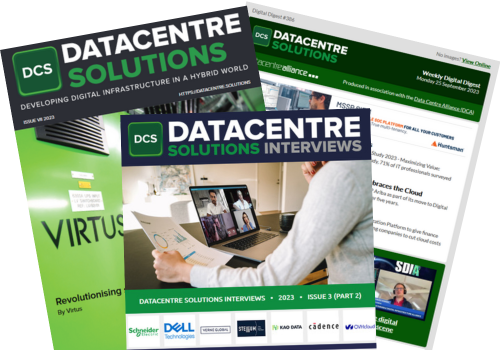
Each week our editor Phil Alsop rounds up the most popular articles, videos and expert opinions. We compile this into a Digital Newsletter and send it straight to your inbox every week.
Digital Magazines
We'll let you know each time a new edition of Data Centre Solutions is released so that you're always kept up-to-date with the latest and greatest news and press releases.
Video Magazines
The Data Centre Solutions Video magazine contains the latest Zoom interviews with experts in the industry.
There is no denying the impact of cloud computing. Gartner’s recent figures show that adoption rates of cloud-based solutions are set to rise to 33 percent by 2017, and 60 percent by 2022. Similarly, IDC predicts that worldwide spending on IT cloud services will reach heights of £65 billion by 2016.
There is a strong belief that you need to replicate your old IT model in the cloud. However, this isn’t the case. Indeed, the cloud enables you to think bigger. Cloud computing has democratised technologies which used to be the preserve of large enterprises, and made them more accessible for SMEs.
In order to gain the greatest benefits from the cloud model, IT services need to be at the centre of any cloud computing strategy. With the right approach, organisations will be able to transform simple IT ‘provisioning’ into an agile service that frees them from legacy in-house IT constraints.
For example, when launching a new product, by using a traditional IT procurement model, they’ll first need to decide on the system that they want, then obtain quotes, calculate the capital expenses required, buy the equipment, and then wait for it to be delivered and installed. Even using conservative estimates, this whole process can take between three and six months.
By comparison, implementing a cloud based solution, which would typically have all of the equipment and functionality that you need ready and available, means that the same project can be up and running in a fraction of the time. As a result, organisations will never need to be hampered by a lack of resource. The operation will be functioning much more quickly and efficiently than before.
However, whilst cloud computing solutions seem to offer a number of compelling benefits to organisations, especially in terms of the agility and scalability that they can provide, there are various cost factors to consider before adopting cloud solutions.
When evaluating the cost versus the benefits of any cloud computing solution, organisations need to look at three very important areas. The first is licensing costs. A lot of people don’t realise that software licensing can actually account for between 30 and 40 percent of their total IT costs.
The second important factor to consider is transition costs. Unfortunately, moving a service to the cloud will never be as simple as some vendors would lead organisations to believe. To begin with, they’ll need to consider what internal resources and/or third-party services will be needed to support this transition to the cloud, and to also be aware of the associated risks.
The final area to be considered is the overall cost of the bandwidth that they’ll need to support a cloud solution. It may be able to give organisations easy access to their data, storage and applications via the internet, but that means that their connectivity to the internet will become even more important in terms of resilience for availability and also bandwidth for performance. Why? Because they’ll want to make sure that any new bandwidth charges won’t outweigh the cost savings that they were hoping to achieve with cloud in the first place.
An alternative solution to gobbling up loads of extra bandwidth is to deploy thin client technology to reduce network traffic and increase application performance.
However, it is important not to let IT hype cloud an organisation’s judgement, therefore, here are five top considerations organisations should ask themselves, before adopting a cloud computing solution:
Cloud computing is now a mature delivery model for IT services, but not a one-size-fits-all solution. Therefore organisations should analyse their specific business requirements to ensure that they choose the most appropriate IT delivery option on a case by case basis. Only then will organisations begin to see and experience the enhanced capabilities that a cloud based solution can offer them.