Digital Newsletter
Each week our editor Phil Alsop rounds up the most popular articles, videos and expert opinions. We compile this into a Digital Newsletter and send it straight to your inbox every week.
Digital Magazines
We'll let you know each time a new edition of Data Centre Solutions is released so that you're always kept up-to-date with the latest and greatest news and press releases.
Video Magazines
The Data Centre Solutions Video magazine contains the latest Zoom interviews with experts in the industry.
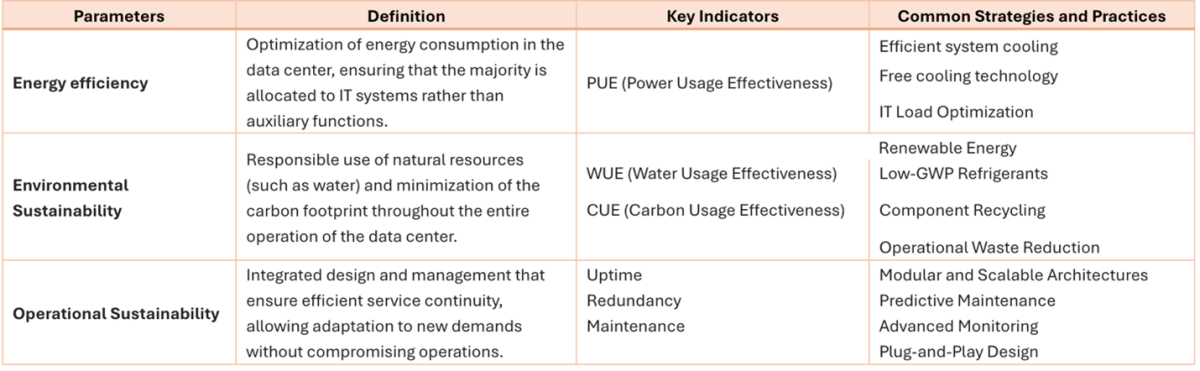
In the data centre industry, sustainability can be measured through a variety of metrics. Power Usage Effectiveness (PUE), Water Usage Effectiveness (WUE), and Carbon Usage Effectiveness (CUE) have become some of the key parameters for environmental responsibility. Yet while these metrics are useful, they can often tell only part of the story.
For what also matters isn’t only how a data centre is running today, but how it can adapt and endure for the future. This is where identifying and realising mechanical system choices within the physical data centre infrastructure comes in.
“Key mechanical system decisions, such as adopting adaptable pipe joining methods, can extend system lifecycles, reduce waste, and simplify upgrades,” explains Lissette Piedra van Dommelen, territory sales manager for Iberia at Victaulic. “It’s about building for the long term, ensuring a facility can adapt to meet future demands.”
From metrics to mindset
The concept of operational sustainability is expanding to become an integrated approach, balancing environmental, technical, and economic objectives. José Farrona, senior solutions engineer at Prime Data Centers, highlights: “It’s an approach that involves selecting low-energy technologies, designing optimised thermal architectures, and implementing solutions that ultimately reduce both PUE and WUE metrics.”
“Equally important, however,” he adds, “is operational continuity through redundancy and predictive maintenance. This ensures uninterrupted service while avoiding inefficiencies, and that operational sustainability demands the rational and optimised use of all resources, including
support systems, human expertise, and physical infrastructure, to maximise asset longevity and minimise waste.”
Why pipe joints matter
With this in mind, operational sustainability requires the design and management of infrastructure that can remain resilient, efficient, and adaptable over decades of change to an ever-evolving industry. It is about ensuring systems can absorb new technologies, adapt to shifting regulations, and evolve without excessive cost or disruption. And it is about recognising that sometimes the most important sustainability decisions are the ones hidden in the details.
The way mechanical systems are designed and built can profoundly influence long-term outcomes in data centre management. It is not only carbon footprint reduction through optimised energy use but also the data centre’s ability to maintain resilient and efficient operations without compromising service availability or quality.
Pipe joining methods might seem like a purely technical concern but if those connections allow for modular expansion, straightforward maintenance, or reuse rather than replacement, they extend the lifespan of infrastructure, reduce waste, and make it far easier to incorporate future technologies. In other words, something as apparently simple as a pipe joint can quietly determine how sustainable and efficient a data centre really is.
Meeting the AI challenge with modular, reconfigurable design
This need for rapid adaptation is echoed by industry leaders facing new technological pressures. As Pedro Muñoz, Global Switch operations director, emphasises, “data center infrastructures must be conceived with modularity, scalability, and operational adaptability at their core. We now see the rise of AI-driven business growth challenging traditional infrastructures with shorter technology lifecycles and increasing power densities.”
To ultimately remain competitive, Pedro suggests, data centers must implement “flexible, plug-and-play designs that allow for rapid, risk-free adaptation without interrupting live operations serving multiple clients.”
Key attributes for future-ready infrastructure
Rigid installation sequences associated with traditional pipe joining systems potentially slow commissioning and scaling phases. In contrast, mechanical joining systems allow modular growth, flexibility in deployment, and phased construction. This approach permits build-in phases, bypassing the need to predetermine exact future cooling or server rack locations, for example. This modularity reduces upfront assumptions and enables growth aligned with evolving demand. The capacity to assemble piping without hot works also offers practical benefits, such as faster installation, fewer specialised labour requirements, and lower cost: all factors that improve
resource efficiency during initial build and later retrofit operations, and, of course, reduce carbon footprint.
One of the areas this matters most is in cooling, centric to any data centre and one of the key industrial environmental challenges. The underlying focus on continuous PUE improvement moves from design through micro-regulation of setpoints, water and air flows, and optimising containment of cold and hot aisles. As the data centre industry transitions away from air cooling to liquid and immersion systems, driven by the power density of AI workloads, success here becomes not only about efficiency gains or compliance with refrigerant regulations. It is about whether facilities can adapt fluidly to new methods of heat management, and modular and adaptable piping becomes even more crucial.
Mechanical adaptability in the ability to reconfigure, expand, or repurpose systems without tearing them apart becomes intrinsic to sustainable transformation. Forward-thinkers in the industry are already advancing pipe joining technologies that enable this kind of adaptability, and their impact on long-term data centre sustainability should not be underestimated.
Efficient and environmentally conscientious
When sustainability is framed only as efficiency, it risks becoming a narrow technical exercise. But when it is seen through the lens of adaptability, it becomes a mindset. It is no longer a single initiative or a set of numbers, but a way of designing and operating with the future in mind. Mechanical system choices such as adaptable pipe joining set the stage for a data centre that can grow, change, and endure.
The shift extends beyond hardware into organisational strategy. As Jordi Vila Rotxés, data center operations manager at Equinix Spain points out, “operational sustainability requires a cultural and organisational shift. Beyond infrastructure and technology, it involves programmatic initiatives to transform behaviours, foster collaboration across teams, and leverage synergies between sites and regions.”
Efficiency, he suggests, is not just technical, it is cultural, requiring alignment across every layer of a data center organisation as AI, regulation, and environmental urgency converge. But this demands infrastructure to be more than efficient. It must be resilient, flexible, and circular.
The big picture of operational sustainability will always be important. But it is the quiet, often invisible decisions in mechanical design that ensure those ambitions are achieved. A choice towards adaptable piping becomes even more crucial. A system that can tolerate re-routing, reconfiguration, or expansion may be the discreet engine of a data centre’s operational continuity and long-term success.