Digital Newsletter
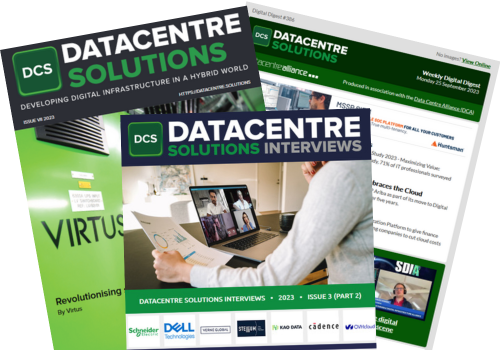
Each week our editor Phil Alsop rounds up the most popular articles, videos and expert opinions. We compile this into a Digital Newsletter and send it straight to your inbox every week.
Digital Magazines
We'll let you know each time a new edition of Data Centre Solutions is released so that you're always kept up-to-date with the latest and greatest news and press releases.
Video Magazines
The Data Centre Solutions Video magazine contains the latest Zoom interviews with experts in the industry.
Data centers have always been critical infrastructure, but their role has expanded dramatically in recent years. As artificial intelligence, cloud computing, and real time digital services continue to scale, data centers are under pressure to operate with unprecedented levels of efficiency, reliability, and responsiveness. This shift is driving a quiet but fundamental transformation in how data center infrastructure is designed and managed—one increasingly shaped by IoT-enabled components embedded deep within power, cooling, and control systems.
Rather than relying on periodic inspections or static thresholds, modern data centers are moving toward continuous visibility. Sensors, displays, relays, and control electronics now generate streams of real time data that allow operators to monitor conditions remotely, anticipate failures before they occur, and fine tune performance across sprawling facilities. These capabilities are not limited to software layers alone. Much of the intelligence enabling this shift lives in the physical components themselves, where rugged electrical hardware is now paired with connectivity, cloud access, and advanced user interfaces.
The Expanding Role of Data in Physical Infrastructure
At its core, IoT in data centers is about transforming physical conditions into actionable insight. Temperature, power draw, load distribution, and system health have always mattered, but they were historically difficult to measure continuously and at scale. Today, embedded sensors and smart displays make these variables visible in real time, often from hundreds of miles away.
This shift has particular importance in high density environments. As computing power increases, so does heat concentration, making thermal management one of the most critical challenges data centers face. IoT-enabled components allow operators to see how conditions vary across zones, racks, or even individual chips, revealing patterns that would otherwise remain hidden. Over time, this data becomes the foundation for smarter decisions—adjusting cooling strategies, balancing loads, and identifying inefficiencies before they escalate into outages.
From Monitoring to Predictive Maintenance
One of the most significant outcomes of increased visibility is the rise of predictive maintenance. Rather than responding to failures after they occur, data centers are increasingly using historical and real time data to anticipate issues in advance. When patterns indicate abnormal behavior—such as sustained temperature increases in a specific area—operators can intervene early, minimizing downtime and preventing cascading failures.
This approach is especially valuable in facilities where uptime is non-negotiable. By segmenting floor plans and tracking performance trends across individual zones, operators gain a granular understanding of how systems behave over time. Predictive maintenance does not eliminate the need for on-site personnel, but it allows staffing resources to be used more strategically, reducing the need for constant manual oversight.
Importantly, predictive capabilities depend on the quality and accessibility of data. IoT-enabled components that integrate seamlessly with cloud platforms provide richer datasets and faster response times, enabling maintenance strategies that evolve alongside the infrastructure itself.
Certifications, Reliability, and the Physical Realities of Data Centers
As IoT becomes more embedded in physical infrastructure, compliance and durability take on heightened importance. Data centers operate in demanding environments where water, heat, and electrical loads coexist at scale. Components must meet stringent certifications to ensure safe operation over long lifecycles.
Environmental and material standards—such as RoHS and REACH compliance—help ensure that components meet regulatory requirements across global markets. In parallel, ingress protection (IP) ratings are increasingly critical, particularly for enclosures and electronics exposed to cooling systems that rely heavily on liquid circulation. In some applications, enclosures must also withstand extreme conditions, including high heat or explosive debris, adding another layer of complexity to component selection.
These considerations underscore a key reality: IoT-enabled components must be as physically robust as they are digitally capable. Data alone is not enough if the hardware generating it cannot withstand the environment in which it operates.
Engineering Led Integration in a Growing Market
As data centers evolve, so too does the role of component partners who support their design and operation. This is where companies like Wesgarde enter the conversation—not as broad line suppliers, but as engineering focused collaborators. Rather than offering one-size-fits-all product lists, Wesgarde applies its experience across power distribution, enclosures, and control electronics to help OEMs and engineers integrate components directly into their designs. This approach prioritizes customization and fit-for-purpose solutions, reducing the burden on engineering teams and allowing them to focus on system level challenges.
In the data center context, this often means adapting familiar components—such as power distribution units or enclosures—for new operational demands. Custom enclosure designs, for example, can incorporate transparent doors for visual inspection, tailored dimensions for specific installations, or precision drilling to accommodate complex wiring requirements. These adjustments may seem incremental, but at scale they can significantly improve usability, safety, and efficiency.
IoT, Sustainability, and Thermal Control
Sustainability has become an unavoidable topic in discussions about data centers, particularly given their energy and water requirements. While headlines often oversimplify the issue, modern facilities are increasingly designed around closed-loop thermal systems that prioritize efficiency and conservation.
In these systems, large volumes of water are introduced once and carefully managed over time. Maintaining precise temperature control is essential—not only for protecting equipment, but also for avoiding costly and wasteful system flushes. IoT-enabled thermal controls play a crucial role here, allowing operators to monitor conditions continuously and respond before temperatures drift into unsafe ranges.
Predictive maintenance and real-time monitoring support sustainability goals by aligning operational efficiency with environmental responsibility. In many cases, reducing waste and conserving resources also lowers operating costs, creating incentives that reinforce one another rather than competing.
Looking Ahead: Intelligence at the Component Level
The trajectory of data center infrastructure points toward deeper integration between physical hardware and digital intelligence. As manufacturers continue to embed connectivity and analytics into components, predictive capabilities are likely to become more sophisticated and more centralized within cloud platforms.
Distributors and engineering partners act as intermediaries in this process, relaying feedback from the field to manufacturers and helping translate emerging needs into practical solutions. Over time, this feedback loop accelerates innovation, ensuring that IoT-enabled components evolve in step with the environments they support.
For data centers navigating rapid growth and rising complexity, the path forward is not defined by any single technology. Instead, it lies in thoughtful integration—combining proven hardware with targeted intelligence to create systems that are resilient, adaptable, and prepared for what comes next.